Land of Arielia Class Ranking Guide: Best Classes, Combat Styles, and Dungeon Performance
Nov 10, 2026
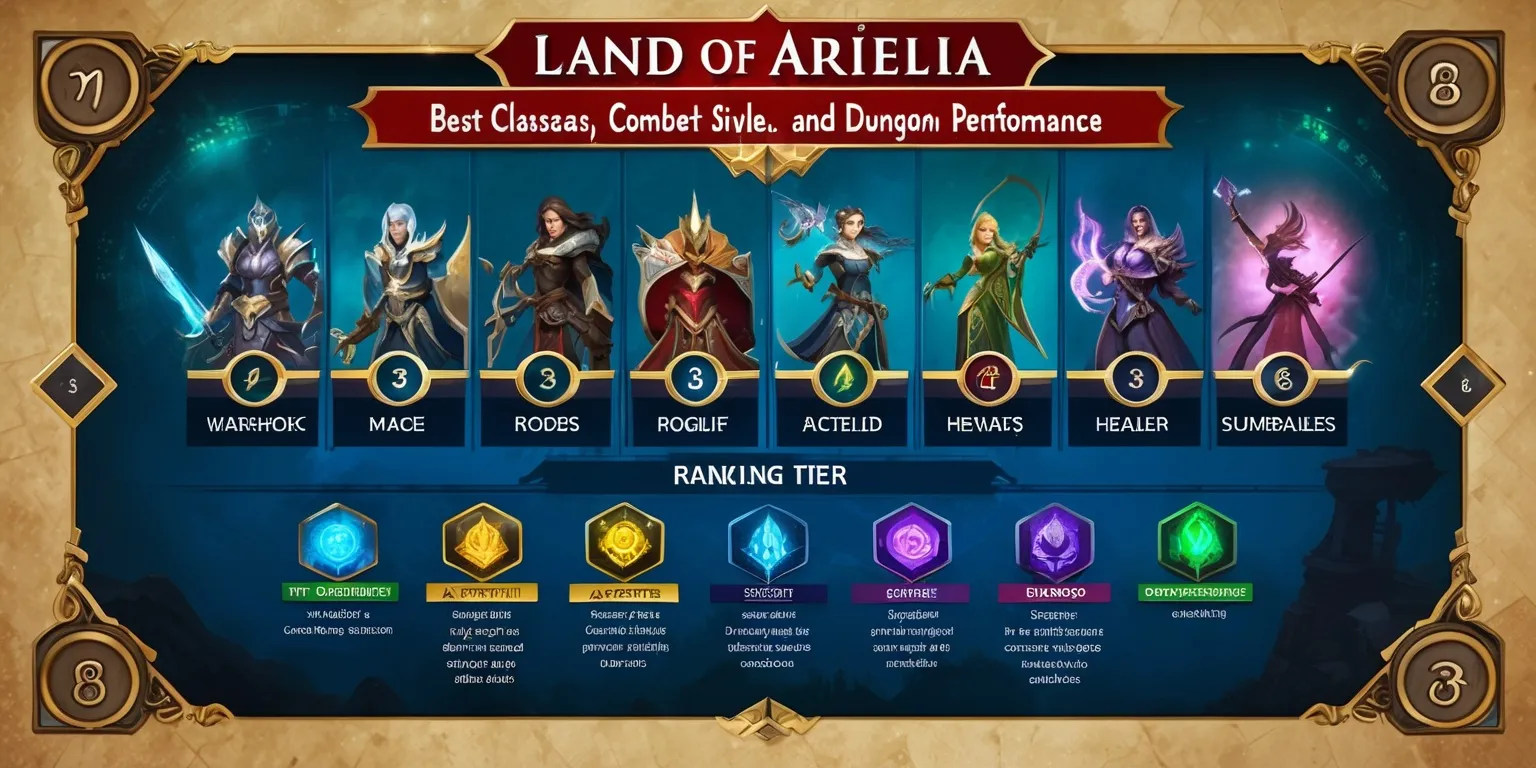
When you first enter Land of Arielia, the path ahead feels shaped less by scenery and more by choice. The game asks you to commit early to a class, and that decision influences how battles unfold, how your character feels in motion, and how useful you become in group content. With four classes available, each built around a different combat style, the game encourages players to think about damage output, weapon type, and whether they prefer distance or close contact. For some, the choice is purely practical. For others, the appeal lies in style, fantasy, and the satisfaction of controlling a character that matches their preferred rhythm of play.
The class structure is the heart of the experience, because it shapes both solo progression and multiplayer performance. In most games of this type, the difference between classes can be subtle, but Land of Arielia makes the contrast more visible. One option leads the pack in sheer power, while the others offer flexibility, strong area attacks, and reliable usefulness in different situations. That balance creates room for personal preference, but it also means the game has a clear competitive edge for players who care about optimization. The result is a system that rewards knowledge without making every other class feel irrelevant.
Choosing a Role Before the World Opens Up
The first major decision in Land of Arielia has lasting effects because class selection determines your combat identity from the start. Each class comes with its own weapon style and attack pattern, which changes how you approach enemies and how you position yourself during fights. That matters especially when handling dungeon encounters, where coordination and damage output both influence success. Players who like staying at range will naturally gravitate toward certain options, while those who enjoy a sturdier frontline presence may prefer a different route. Since the game does not hide these distinctions, your preference becomes part of the strategy.
This early choice also helps define how the game feels moment to moment. Some classes rely on broad damage zones, making them ideal for clearing groups quickly, while others focus on precise strikes or explosive bursts. Because of that, class identity is not only about statistics. It also affects pacing, target selection, and the confidence you get from knowing how your character behaves in battle. That is one reason the class decision remains central throughout the game, even after you have spent many hours progressing through content.
The Power Curve Behind the Ranking

The current class ranking places Thunder Gunner at upper section, and the explanation is simple: the class delivers exceptional burst damage and excels in both boss fights and general enemy clearing. When a class can do well in solo content and still remain highly effective in a team setting, it tends to rise above the rest. Thunder Gunner benefits from that kind of versatility, especially when supported by strong gear and favorable stats. Its kit leans heavily into explosive attacks, which gives it a strong visual identity as well as a mechanical advantage.
What makes the class stand out is not only raw damage, but the consistency of that damage in real encounters. In multiplayer dungeons, where enemies may arrive in waves and bosses can require focused output, a class with high burst can shift the pace of the entire run. That is why many players view Thunder Gunner as the benchmark. Even so, the ranking is not just about one class being strong in a vacuum; it reflects how well a class performs across multiple forms of content and how efficiently it converts its strengths into results.
Why Distance Changes Everything
One of the defining traits of Land of Arielia is the split between ranged and melee combat. At present, only Swordsman uses melee attacks, while the remaining classes fight from a distance. This difference has an immediate impact on how players experience encounters. Ranged classes can often keep a safer position, maintain pressure from afar, and handle enemy patterns with greater freedom of movement. Melee combat, on the other hand, tends to feel more grounded and direct, with a stronger sense of commitment each time you move into danger.
That divide creates different forms of tension in battle. Ranged classes may focus on spacing and timing, while the Swordsman must work within closer boundaries and capitalize on opportunities quickly. In dungeons, that can make melee combat feel more rewarding for some players because it requires a bit more confidence and awareness. It also gives the game more texture, since not every class approaches combat with the same tempo. The result is a roster where the combat distance alone can shape your favorite style.
Thunder Gunner and the Value of Explosive Burst
Thunder Gunner earns its leading position by combining strong attack performance with a kit that naturally rewards aggressive play. The explosion-driven design makes it is especially effective when enemies cluster together, and that gives it an edge in clearing content rapidly. With the right equipment and stat investment, the class can surpass others in damage charts, especially in dungeon settings where consistent pressure matters. Players who enjoy a sense of impact with every attack often find this style satisfying because its strength is easy to feel in action.
There is also a practical aspect to its popularity. A class that performs well in more than one type of encounter tends to remain valuable even as players move through different stages of the game. Thunder Gunner fits that pattern. It can handle boss-focused situations and still contribute meaningfully when waves of weaker foes appear. For players who prefer a clear, powerful, and efficient combat loop, the class offers a strong combination of visual flair and mechanical effectiveness that makes it hard to ignore.
Blade Work and the Swordsman’s Place in the Lineup
Swordsman occupies a unique position because it is the only melee class in the current lineup. That makes it different before a single attack is even made. Its damage is solid, but the class also brings a bit more durability than some of the others, which helps explain why it appears frequently in multiplayer dungeons. The closer combat style may demand more commitment, but it can also feel dependable when fights become crowded or when characters need to hold their ground while pressure builds around them.
Instead of relying on range, the class creates its value through direct engagement and a sturdier presence. That gives it a distinct place in the class ecosystem, especially for players who want a more grounded combat fantasy. It may not hold the top position in the rankings, but it remains a practical and appealing choice. The combination of decent damage and extra toughness means it can serve both personal preference and party utility, which is often enough to keep it relevant in regular play.
Frost Mage and the Appeal of Area Control
Frost Mage offers a different style entirely, leaning into magical damage and area-of-effect attacks. Its power comes from scaling with ATK, which allows it to remain effective when properly built, and its toolkit encourages players to manage groups rather than focus only on one target. That makes the class feel especially useful when several enemies appear together, since wide attacks can simplify combat flow and reduce the need for constant repositioning. It is a class that rewards awareness, timing, and building around its strengths.
Players who enjoy the fantasy of commanding elemental effects often find Frost Mage particularly appealing. It has a distinct visual personality and a combat rhythm that feels measured but forceful. The class may not dominate every situation in the same way Thunder Gunner can, but it remains comfortably competitive. In practice, it feels balanced, reliable, and easy to enjoy for players who prefer magic over physical weapons. Its place in the A tier reflects that mix of effectiveness and comfort.
Tempest Archer and the Balance Between Speed and Precision
Tempest Archer rounds out the stronger options with a kit that also focuses on area damage, while still maintaining a respectable single-target skill. That dual presence is important because it means the class can adapt to different kinds of encounters without feeling overly specialized. Players who like a nimble physical attacker often appreciate this design, since it preserves distance and allows for a more mobile style of battle. The class feels sharp and responsive, with a toolkit that supports both control and focus.
Compared with magical classes, Tempest Archer offers a more physical identity while still sharing some of the same practical advantages. Its attacks can handle groups efficiently, but it also has enough single-target value to remain useful against more durable opponents. This flexibility helps it stand out among the ranged choices. For players who want a class that feels agile and combat-ready without leaning into spellcasting, it provides a strong middle ground. That versatility helps explain why it sits comfortably in the upper part of the ranking.
How Dungeon Play Shapes Class Value
Multiplayer dungeons are one of the main reasons the class ranking matters so much in Land of Arielia. In group environments, damage output is not just a personal number; it contributes to how quickly a team moves through encounters and how smoothly difficult sections are cleared. A class that excels in group content often gains more attention because its strengths become easier to measure. This is part of why Thunder Gunner stands out so clearly, but it also explains why other classes are still useful even if they do not lead the ranking.
Dungeon play also highlights the importance of consistency. A class that can attack effectively without losing momentum is valuable because team fights often involve shifting targets and rapid changes in positioning. Some classes shine through area damage, while others support with sturdier gameplay or focused single-target pressure. The best choices in dungeons tend to be the ones that keep contributing across the whole run, not just during a single encounter. That broader usefulness helps define the game’s class hierarchy.
Gear, Stats, and the Difference Between Good and Great
Class strength in Land of Arielia is closely tied to gear and stats, which means performance can change significantly based on how well a character is developed. A strong class with weak preparation may not feel as impressive as expected, while a well-built character can rise noticeably above average. This is especially true for Thunder Gunner, whose damage potential becomes even more pronounced when supported by the right items and stat distribution. The game therefore rewards both class selection and long-term investment.
For players of other classes, gear still matters just as much. Frost Mage, Tempest Archer, and Blaze Swordsman all gain value when properly upgraded, and that can reduce the gap in practical performance during regular play. This system keeps progression meaningful because your build choices remain relevant after the class is chosen. It also encourages players to treat the tier list as guidance rather than a strict command. Even if one class leads the board, every class becomes stronger when the rest of the character sheet is developed with care.
Blaze Swordsman and the Middle Ground of the Ranking
Blaze Swordsman shares the A tier with Frost Mage and Tempest Archer, which suggests that it has enough strength to remain competitive without overtaking the top option. As part of the Swordsman family, it carries the same melee identity, but it presents its own flavor and combat rhythm. That makes it attractive to players who appreciate close-range engagement but want something with a different personality from the base class approach. The comes across as recognizable while still distinct, which can be valuable for players looking for a more customized experience.
Its position in the ranking shows that it has meaningful advantages without becoming dominant in every scenario. In a game where playstyle matters almost as much as efficiency, that kind of placement is usually sufficient to draw in the intended audience. Some players want the highest possible power ceiling, while others want a class that feels satisfying and still performs reliably in both solo and multiplayer content. Blaze Swordsman speaks to that second group, offering a balanced option with enough strength to keep up in most situations.
Server Differences and the Reality of Local Rankings
One detail that can affect class perception is that rankings may vary by server. That means the position of each class is not always identical everywhere, especially if player trends, gear access, or optimization habits differ from one community to another. In a server where certain builds are more common or where resources circulate differently, the effectiveness of a class can feel slightly stronger or weaker. This adds another layer to the game’s competitive discussion because class value is not always universal.
For players, that means it is worth checking local performance before making a final judgment. A class that looks average on paper may perform above expectations in a specific environment, while the top class may not be as widespread in every group. This keeps the class conversation dynamic and prevents the ranking from feeling fixed beyond question. In practice, the best choice is often the one that matches your preferred combat style while still fitting the demands of your server’s meta and community habits.
Style, Fantasy, and the Character You Want to See
Beyond stats and rankings, Land of Arielia also gives weight to appearance and personal taste. Many players choose a class because they enjoy how it looks, how the weapons animate, or how the fantasy matches the character they imagined. That is part of why the advice around class selection is not purely mathematical. A Frost Mage may appeal because it feels elegant and mystical, while a Tempest Archer may stand out for players who prefer a swift, physical aesthetic. These choices affect enjoyment over time, which is often just as important as damage numbers.
The game benefits from that variety because it lets different players feel at home for different reasons. Some will min-max every detail and chase the strongest setup. Others will simply want a class that feels good to use and looks right on screen. Since each class delivers a distinct identity, the game supports both mindsets well. That makes the class system more than a set of combat stats; it becomes part of the broader appeal of the world and the character you choose to inhabit.